

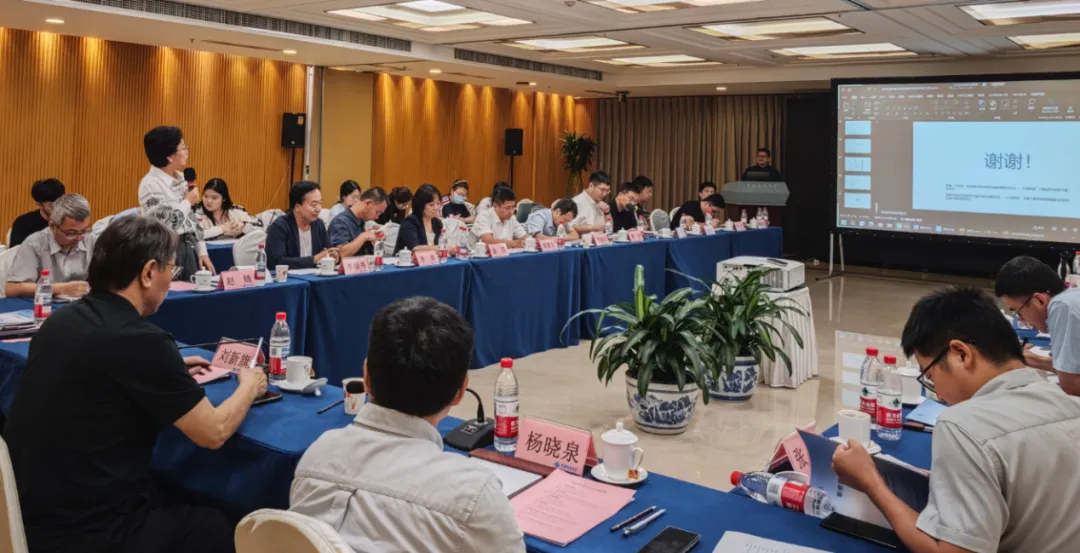
 From September 13 to 14, 2025, the Novel Protein Symposium was successfully held at the China Hall of Science and Technology in Beijing. The event was chaired by Professor Li Jian, Vice Dean of the School of Food and Health at Beijing Technology and Business University, and brought together experts, scholars, and industry professionals from universities, research institutions, and enterprises. In-depth discussions were conducted on topics such as resource exploration of novel proteins, synthetic biology, protein design, standards and regulations, and key technological challenges.
Li Shunxiu, General Manager of Shandong Yuwang Ecological Food Industry Co., Ltd., was invited to attend and delivered a supplementary speech during the session on "Key Technological Challenges of Novel Proteins." From an industrial practice perspective, he analyzed three core bottlenecks currently hindering the scalable development of novel proteins:
1. The "Flavor" Challenge: The Consumer's Veto Power
The primary bottleneck in industrialization is how to economically and efficiently address undesirable or specific flavors in large-scale production, achieving pure and stable flavor profiles that align with consumers' taste preferences.
2. The "Performance" Challenge: The Application Threshold for Replacing Traditional Proteins
The core battleground for novel proteins lies in "replacing existing products." Key functionalities such as emulsification and solubility must be stably demonstrated in end products, which constitutes the application threshold for novel proteins to replace traditional proteins.
3. The "Cost" Challenge: The Decisive Test for the Industry's Future
Cost directly determines whether novel proteins will remain a "high-end niche" or become "accessible to all." Technologies such as cell cultivation and precision fermentation still face high costs. Innovation is needed to reduce expenses, making novel proteins truly affordable and widely available.
Li Shunxiu emphasized that these three challenges are difficult for any single organization to overcome alone. Yuwang expressed its willingness to open up its application scenarios and pilot platforms to collaborate with peers across sectors, focusing jointly on these bottlenecks and driving novel proteins from the laboratory to the market for true industrialization.
The symposium not only deepened dialogue among industry, academia, and research communities but also charted a more actionable path for the future development of novel protein technologies. Yuwang will continue to uphold technological innovation and open collaboration, contributing industrial strength to advance the development of China's novel protein industry.